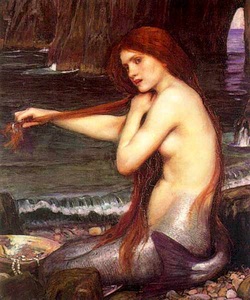
Mermaid - John William Waterhouse
A Mermaid - John William Waterhouse, 1901
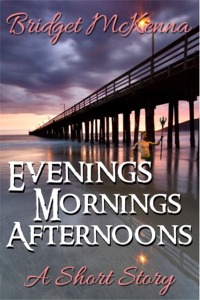
Yesterday I re-published one of my favorite short stories: “Evenings, Mornings, Afternoons.” This one originally appeared in Isaac Asimov's Science Fiction Magazine in December 1990.

In my own tradition of offering the afterword to my short stories for free in a shameless effort to get you to shake loose of $1.49 for the whole thing, what follows is the story of how I came to write "Evenings, Mornings, Afternoons."

When I was a very small child, my sister took me to see Mr. Peabody and the Mermaid, a poignant romance/comedy starring William Powell (star of The Thin Man films) as a man resisting his own middle age, and Ann Blyth—not quite out of her teens—as a mermaid whom he catches and takes home after he hears her singing late at night. Being at the age when absolutely everything is real, I watched the film entirely convinced of the reality of mermaids and the men they fascinate.

Later I would read Peter Pan, and a few years after that, the Odyssey. Sirens who lure sailors to their deaths on the rocks are even more fascinating than cute animated mermaids with cockle-shell bras, if a bit less cuddly, and the whole idea of the possibilities in the largely-unexplored alien landscape of the oceans was renewed every time I visited an aquarium. The sea, to me, is another planet—one on which we land-dwellers would perish immediately. But oh, what amazing aliens have evolved to flourish there, and how unlike us they are in every way. The idea of people who live in the sea might go back to seals seen from afar by ancient fishermen. Certainly no-one knows for sure, but I think we’re all agreed there’s no such thing as mermaids.

We are, aren’t we?

Re-reading “The Love Song of J. Alfred Prufrock,” by T.S. Eliot in 1991, I was struck by the similar theme to the film I so loved in my childhood. Certainly the producers of Mr. Peabody might deliberately have borrowed the idea from the closing stanzas of the poem: a man afraid of growing old and disappointed in his own ordinariness entertains the idea of making contact with the mysterious “other” that remains somehow immune to the burden of years. Mr. Prufrock feared he would not hear the mermaids’ song, while Mr. Peabody felt somehow chosen by his mermaid, and somehow entitled to try to keep her for himself.

But Jonathan, the hero of my story, is neither of those gentlemen, though he is both beyond middle age and a bit romantic. What if, the writer in me wondered, a man approaching the end of his life was able to break the veil between the “real” and the “unreal” and perceive the reality of mermaids? After asking myself this question, I proceeded to attempt to answer it with a story.

If you’ve ever been confused by discussions of theme in English classes, that about wraps up the whole subject. The author asks herself a question and proceeds to answer it as best she can by telling a story. When she then asks “And then what happens?” she begins to concoct a plot and storyline to hold the theme. And the context, or setting, of the story holds the plot. It’s a bit like matryoshka dolls. For a story about mermaids, I took the easy way out and set it by the ocean. And the ocean quite naturally informed every scene.

I loved Jonathan from the first moment I saw him gazing out to sea. I also knew he was dying, and I grieved for him. Yes, writers are a bit crazy; I’m your proof. I didn’t consciously know he was gay until I saw him sitting at his table in the hotel dining room, twisting the string around his teabag, but once I did know, it felt so right that I suspect my unconscious mind always had that knowledge.

Kostopoulos breezed into the dining room and into the story without my knowing anything about him until I typed his name. Then I knew everything. How the hell does that work? I wish I knew.

Anyhow, when I had the story where I wanted it, I sent it to Gardner Dozois at Asimov’s, and he bought it. Some months later I received proofs back from Sheila Williams—then the managing editor, now the editor of that fine publication. The typesetter, whose name I never knew, had removed any mention of mer-people of the male persuasion. I contacted Sheila, and she talked to the typesetter. Apparently that worthy was shocked at the implications. “But that would mean he’s…” “Yes,” Sheila informed him gently. “He’s gay. Now change it all back.”

As the inimitable Sir Ian McKellen has been known to say: “Some people are gay. Get over it.”

Twenty-one years later, with a bit of light rewriting and editorial tinkering by my lovely and talented daughter, Marti McKenna, “Evenings, Mornings, Afternoons” is again available to readers. I’m really thrilled to have this story back in publication. I hope you enjoy it.


Picture
I originally posted this one over on Occupy Publishing, but I realize not all my visitors drop by there, so I thought I'd repost it here, because for those of us doing some or all of our publishing as independent author/publishers, there are three things whose importance can't be overestimated: Good cover design, good formatting, and good editing. 

At the bottom of this post is a list of recent articles on the importance of editing. Anyone wishing to skip over the author's opinion on the matter may scroll down to the list.  


The Part About Assumptions
Many writers assume that when a publisher buys their book, they'll receive world-class editing to whip their work into world-class shape. And to be fair, that sometimes still happens, even in these disrupted times. But that assumption doesn't take into account the fact that most writers won't sell their manuscripts in the first place. The vast majority will never acquire representation, and the vast majority of those who do won't find a publisher. That much hasn't changed since "The Golden Age of Big Publishing." What has changed is the number of contracts being offered to new writers. That number has shrunk.

Of those writers who continue to beat their heads against that wall, some will be chosen (passive voice deliberate). They are most likely to be chosen if their book is already a) really, really good, and/or b) really well-suited to one or another publishing sub-genre. And even really, really good books go begging. Some fall prey to the exigencies of the market, others to the whims of narrowing editorial tastes (as agent Jenny Bent reveals here). Of those who are not chosen, some will give up, some will continue to fill drawers with "failed" manuscripts, and some will publish their books themselves.

The chosen ones will face smaller advances, increasingly predatory agency and publishing contracts, shrinking shelf space, nearly or entirely absent marketing and promotion, and publishers who will overprice the electronic edition, scaring away potential readers. And guess what? They may or may not get the stellar editing they were hoping for.

The Part About Editing, and the Part About Self-Publishing
Whether you're publishing your own book or looking for a traditional publisher to shepherd it, editing can make or break it. As a traditionally published author you won't have a choice of editors, but you also won't have to pay directly for editing. You will pay in the amount of cover price your publishing company makes vs. your very small advance and your very small royalties.

Here at the Occupy Publishing camp (on the Internet, no-one can see your tents), we've noticed a double standard where indifferent editing is concerned. Readers who might not notice or care overmuch about a few typos in a Big 6 book are excoriating indie authors for minor errors. And it has to be said that not all the errors they find are minor; far too many self-published books hit the virtual shelves in dire need of proofreading, formatting, and editing.

If you decide to publish your own book, you face doing for yourself or hiring done everything a publisher would have done for you (including the things you dreamed a publisher would do for you, but which they very likely would not have done). Among those is engaging the services of an editor—possibly the same freelancer your publisher would have hired.This is tricky territory to negotiate. The Internet woods are full of editors, and not all of them are good. Not all of the good ones are suited to what you write. I gave birth to mine, and I highly recommend her editing talents, but let's face it, most writers are not going to go to that kind of trouble.

As a self-published author, you can shop for editors, but you will pay professional rates for their work. You can rely on friends to be alpha- and beta-readers, and that may be helpful, but you'll be fortunate indeed to get first-class editing out of them. If you know an editor well enough, you can negotiate rates and/or barter for services. You can learn to self-edit, which won't obviate the need for an outside editor, but will ensure she has less to do, and gets less of your money. 

The Articles
Here's a smattering of recent intertubes activity on the subject of editing, presented for your education and entertainment. I hope they'll help you make an informed choice about the editing for your books. Please note that there are articles listed below that are not in the original Occupy Publishing post.

The multi-talented Marti McKenna tells you when it's time to Let the Writer Write
Chris Robley, writing on BookBaby, tells you How to Edit While you Write
Guy reveals The Evil Secret to All Writing: Editing is Everything
Karin Cox, guesting on David Gaughran's Let's Get Digital, offers up Self-Editing: Back to Basics, Part I
Self-Publishing Review tells you Where to Find an Editor for a Self-Published Book
Phil Athans says Self-Published E-Books Are Losing Readers Due To Bad Editing
And less recent, but no less valuable, a couple of archived articles from the excellent Alan Rinzler: 
Fear of Editors
and
When Do You Need an Editor?

What did I miss? Please comment if you've found other good articles on editing, or books you've found helpful.  
And here's an article I wrote for my editing clients on self-editing, soon to be part of a book. I hope you enjoy it.


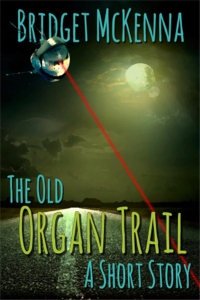
Yesterday I re-published one of my favorite short stories, "The Old Organ Trail." In keeping with my practice of providing the afterwords I include with these published stories for free, what follows is the tale of how I came to write (and almost gave away my chance to write) the story that would become my first science fiction sale. So you don't have to pony up 99c for this part; just enjoy. Herewith, how I found the Old Organ Trail.

In 1985, I had sold a couple of short fiction pieces to mainstream markets, but had yet to make a sale in science fiction and fantasy. It wasn’t for lack of trying, but even though most of the short fiction markets were SF/F publications even that long ago, there were still too few for the number of people wanting to break into them. I got back some great rejections, but couldn’t get a look in to the magazines of the day. I was by turns determined to break in to the science fiction field and certain I didn’t have what it took to write science fiction. Mind you, I didn’t know what that mysterious quality might be, but I spent about half my time thinking that much like green eyes or curly hair, I hadn’t been blessed with it.

In the spring of that year I went to a science fiction convention and heard Algis Budrys speaking about the quarterly Writers of the Future Contest, which was going into its second year at the time. I went to the WotF party that night, sat around with Algis and Dean Wesley Smith (who had just had a story appear in Writers of the Future, Volume I) and a lot of other pros and hopefuls. Algis told us about the structure he believed lurked at the center of every story, and how to use it to write fiction (I talk about this in a little more detail in the afterword to “Hole in the Wall,” which is reprinted on my blog here). It was a good contest, and as far as I know it still is. The prizes are generous, and it’s given writers far more prominent than I their kick-start in writing SF/F. I decided then and there that I'd submit a story every quarter until they either gave me a prize or told me to bugger off.

“The Old Organ Trail” was my third quarterly submission to the contest. One evening in December of 1985, I got a phone call from the contest director informing me I’d won first prize in the fourth quarter of that year’s contest and that I’d also be getting an offer for the story from Algis, who was editing the anthology. So in addition to the $1,000 prize money for the quarter, I made another princely sum in 1980s dollars from the sale of the story. I was so gobsmacked I completely forgot how I almost gave it all away... 

(CUE SCOOBY-DOO FLASHBACK FX)

Some months previous to writing the story, I’d been driving down California Highway 41, as I often did on my way from home to work, and I encountered a sign for Interstate Highway 299, the historical Old Oregon Trail. On this particular morning my sleep-deprived eyes mis-read the sign. “Oh, that’s funny!” I thought when I realized I’d accidentally seen the words “The Old Organ Trail.” “That’d make a good story title,” was the next thing I thought, but I dismissed it almost instantly. After all, the title was clearly humor, and I was a serious writer. Of serious stories. I was still a little new to the whole fiction writing business, and took it all rather seriously.

I had a friend, however, who was a natural humorist and a good writer. I approached him with my humorous title. “I’ll never write the story that goes with this,” I told him, “so feel free to use it if you can.” Some weeks or months went by. I was out having cheap Mexican food with my humorist friend, and I asked him if he’d ever done anything with that story title. “No,” he said. “I keep thinking it’s actually your story after all.”

I started to go into my “I don’t do humor” routine, but he just said “Why don’t you tell me what the story’s about?” “It’s about my Uncle Pewtie,” I began. I had not then, and have not now, any idea where those words came from. “He used to be a liverlegger, but he’s retired now…well, whaddya know? Maybe it is my story.”

And it was. And my friend was and is a wise man. And once I started writing, the words just wouldn’t stop. And when it won a contest and was published in a paperback anthology, I knew I’d turned a corner I could never un-turn. I was a science fiction writer.

A few months after winning the contest quarter, Algis invited me to participate in the first Writers of the Future workshop. They hold these for the contest winners every year now, but this was a test run to see if the idea was a good one. Each invitee had to pay for his or her own travel, food, and lodging; the instruction was free.

And what instruction it was! Algis’s connections with the movers and shakers of the golden age went back to his teenage years, and it would have been hard to think of any well-known SF writer who didn’t consider him either a friend or a mentor—usually both. He had assembled a who’s who of science fiction to spend a week teaching us in Taos, New Mexico: Frederik Pohl, Jack Williamson, Gene Wolfe, and Algis himself. When that week was done, I had a better grasp on what I was doing as a writer than I’d ever known or imagined. I had knowledge of the publishing business I would have spent years acquiring the hard way. And I had some new friends who are now treasured old friends. I went home and used my new knowledge to start writing better stories.

It took me a few years to make my next SF/F sale, but I was writing the whole time, and also writing for a living in the computer games industry. When I got to feeling down about it, I could always look at that copy of the anthology in my bookshelf and know I was doing something right, and if I did it then, I could do it again. Eventually the sales came, and the checks, and some award nominations, and a full-time writing day job, and eventually I wrote and sold some novels. I learned that mastery isn’t a target, but a never-ending process, and that writing success isn’t so much a destination as a journey that all writers are on all the time. If you’re on that journey, I’ll see you on the road. Keep an eye peeled for liverleggers.
 
 
Picture
Over on Occupy Publishing, I've posted an article on what writers—indie or otherwise—need to know about editing, a list of recent Internet articles on editing, and a document that will help writers edit themselves more effectively. 

Sound like something you might be interested in? Get on over to Occupy Publishing and check it out! I'll return with more publishing news, and a new short story, in a couple of days. 


Picture
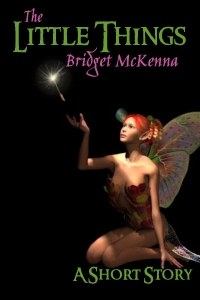
Today I re-published  “The Little Things,” a short story originally published in the 1993 anniversary edition of The  Magazine of Fantasy & Science Fiction, which at that time was edited by Kristine Kathryn Rusch

In keeping with my policy of providing the “writing-of” afterword to each republished story here, what follows is my latest afterword, “Writing The Little Things.” I hope you enjoy it, and of course if it makes you want to spend 99c to buy the story, so much the better.

Writing "The Little Things"
Many years ago I first read about the annual red crab migration on Christmas Island. It was in National Geographic, accompanied by some amazing photos of roads and streets and the stairs of public buildings entirely covered in masses of fortunately vegetarian crabs, while the islanders went about their daily business, albeit carefully.

Christmas Island is a little speck in the Indian Ocean northwest of Australia, just 135 square kilometers in area. For comparison, Seattle—where I live—is a slightly larger speck with an area barely more than 150 square km.

Fifty million or so Christmas Island red crabs, Gecarcoidea natalis, live on Christmas Island under the cover of the forest canopy. For ten months of any year, they are seldom seen unless one is looking for them. But every year from October through November (and sometimes into December), every able-bodied red crab on the island leaves its forest home and heads for the sea to mate.

Over half of the island is an Australian national park, the crabs are protected by law, and many roads are closed to vehicular traffic during the migration. That said, an estimated two million crabs a year are squashed by automobiles, and you may be sure many are eagerly snapped up by other types of predators, too. Tens of millions eventually reach their mating coves at the ocean’s edge, where each female discharges about 100,000 eggs into the sea. The survivors will later form a millions-strong reverse migration back into the forest.

So that’s the part about the crabs. Look ’em up. There are videos. It’s amazing.

This is the part about the fairies.

In 1990, Walt Disney re-released its 1940 animated film Fantasia to 500 theaters across the U.S. I remember sitting in the darkened cinema watching a sequence early in the film set to Tchaikovsky’s “Dance of the Sugar Plum Fairy.” In this part of the film, tiny, slender winged creatures dance through the air, sprinkle flowers with dew, and generally flit about looking charming. It really is quite a lovely bit of Disney animation. My favorite part is where the fairies bedew a spider’s web and make it sparkle like some fine lady’s gems.

I have watched this film since, and haven’t yet been able to pinpoint where what I saw might have reminded me of the red crab migration, and made me think “Yeah, but they wouldn’t look so cute if there were about fifty million of them.”

My mind began to do that thing writers’ minds do, and by the time I arrived home, I had begun to imagine a fairy migration to rival anything Christmas Island had ever seen. Only instead of an expected annual event, this one would be the entirely unexpected revival of an endangered species, and the affected people would be entirely unprepared for the complete and utter invasion of another life form into their normally uneventful lives.

And so grew the sleepy village of Morgan’s Glen, where fairies exist in picture-books, and in the fond memories of old people like Miranda Morgan, who actually saw one when she was six or seven. And into that first day of seeing fairies in the world again came Martin Price, Miss Morgan’s gentle gardener and driver, who has never done anything more violent than to set ladybugs out to eat aphids. Cook and Willamena settled into the basement kitchen to round out Miss Morgan’s minimal staff, and Mr. Pennyford and Joey Stanleigh appeared magically when needed to provide a slightly different point of view on the desirability of having fairies around.

Writing a story—even when no fairies are involved—is always a sort of magical act. Since the time I wrote “The Little Things,” I have written to order for book and game franchises, and for theme anthologies. That sort of writing can easily seem cut and dried as you begin it, but no matter how a story is called into being, some sort of creative magic arrives at some point and takes over the process. If it did not, you’d end up with a collection of sentences and paragraphs without any real life in them, and no-one—no matter how devoted to the franchise—would care to read it.

This story felt magical to me from the opening paragraph through to the last words on the last page. I made some minor revisions for Kris Rusch after sending it to her at Fantasy & Science Fiction, adding the scene where Martin and Miss Morgan discuss her reluctance to reveal the “Morgan family secret” to help the village dig out from under the fairies, and deleting a scene where Miss Morgan appears at a second town council meeting. Kris thought the scene seemed tacked on and unnecessary, and indeed it did. Good editors are worth their weight in anything you’ve got, and she’s among the best.

So there you have the story, and the story behind the story. Writing “The Little Things” was one of the most enjoyable experiences I ever had writing a piece of short fiction. I think Martin and the fairies must have done the work, and I had all the fun. 


Hole in the Wall by Bridget McKenna
Hole in the Wall
Today I put up a corrected version of my short story “Hole in the Wall,” which was originally published in Isaac Asimov’s Science Fiction Magazine in May 1991, edited by Gardner Dozois.

As I've been republishing these works of short fiction that appeared in science fiction magazines some years back, I've been writing afterwords that tell something of how I came to write the story. When I was ready to republish this one, I realized the afterword was far too short and contained far too little. So I started over and told more of the story behind the story.

In keeping with my recent habit of providing the afterword to each new publication here, in addition to inside the very-reasonably-priced book itself, what follows this paragraph is the afterword to “Hole in the Wall,” which you can read even if you’re not going to  shell out 99c, though of course I would never try to stop you from doing that too.

Writing Hole in the Wall
When I first got the idea for “Hole in the Wall,” I didn’t know what I was going to do with it. I knew the story took place in a diner, and in the diner was a wall with a portal that went somewhere. So I had a setting, but not yet a story. Later I decided the man who ran the diner was called Tomacheski, who was a recent immigrant. Now I had a setting with a character. And there it languished. In those days, or so it seemed to me at the time, some of my ideas became fully-realized stories, and others did not; I had no clue as to why. I was still a bit new to this writing lark, and although I'd made a couple of fiction sales, the whole process seemed more like luck to me than craft.
Eventually, luck took me far enough that I could absorb the craft I needed. I met Algis Budrys, who was then the editorial director for the Writers of the Future contest. On the night we met, at a party attended by quite a few starry-eyed wannabe science fiction and fantasy writers, he shared with us the seven-point plot skeleton that he claimed was the inner structure of every story. You would not find it in vignettes or stream-of-consciousness pieces, he said, but whether the author knew it was there or not, it served as the bones of every story with a beginning, a middle, and an end, and knowing how to apply it was an important key to stories that worked.

I didn't yet know whether that was true, and I didn’t yet know how basic the structure of narrative is to human consciousness, but I took it on faith. I consciously applied the model to the next story I wrote, and the next, and the next. I sent these stories off to Writers of the Future, in three successive quarters. I received honorable mentions for the first two, which was wonderful encouragement, especially as some of the most amazing writers of the time were judging: Anne McCaffrey, Roger Zelazny, Larry Niven, and Gene Wolfe were among the judges that year. I felt there was a distinct possibility I might be doing something right.

I've since found the seven plot structure elements Algis revealed to me that night in every story I've ever examined, no matter how commercial or how high-flown and literary, though many writers will still tell you the structure doesn't exist, and others confuse plot with formula. Algis used to say "Formula is putting Coke™ in a Coke bottle for Coke drinkers. Plot is the structure of the events in your story. Storyline is what happens to your character as a result of those events." Years later, a writer who's won every award I ever lost and a few more rapped my knuckles thoroughly when I wrote an article about seven-point plot structure for a writers' magazine, and warned anyone reading his commentary that I was peddling claptrap. You can see that opinions differ sharply on this subject.

So back to the evening in December 1985, when I got a phone call at the bookstore I managed in Redding, California. It was from the WotF contest director, who informed me I had won first prize for the fourth quarter of that year for my story "The Old Organ Trail." We talked for a few minutes while my feet tried in vain to find the floor; he seemed as pleased to be giving the news as I was to be receiving it. After he'd hung up I remember thinking “I must have mis-heard him. He probably said third place.” Fortunately, that was just my insecurity trying to keep me from getting my hopes up. It was first place, and I got a really nice check for the win, and another when Algis bought the story for the annual anthology at an unheard-of word rate for an unknown writer.
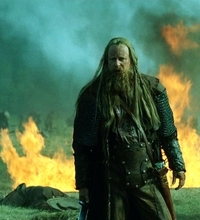
A few months later, I was invited to a week-long workshop in Taos, New Mexico. This was the first Writers of the Future workshop—a test case to see if the idea would work. The workshop was held in May, 1986. There, four of the greats of science fiction—Frederik Pohl, Gene Wolfe, Jack Williamson, and Algis Budrys himself—did their best to teach eleven new writers (including Dean Wesley Smith and Kristine Kathryn Rusch, whose blogs you should be reading if you don’t already) how to turn an idea into a story, and how to make the story shine once you’ve written it. “First you write it, then you make it good!” was a piece of memorable advice from Fred Pohl that should probably be tattooed on every new writer.
As the workshop progressed, and I learned more about the structure of stories, I began to think of the ones I’d begun, then abandoned in old notebooks because I had no idea how to complete them. I had loosely plotted two of them by the time I got home and went looking for those notebooks. "Hole in the Wall" was one of the stories I dug up that year, and eventually finished.
Early on in outlining the story (yes, I do outline—no, I don’t always stick to the outline), I was having difficulty bringing the narrative alive. I realized I needed to make a change in the my choice of viewpoint characters. Ladislaw Tomacheski was the hero of my story, but the more I thought about it, the more I felt I needed to tell it from Morton Grimes’ viewpoint. 

As Tomacheski’s story, it would tell of the triumph of the little guy over a corrupt system which Grimes would personify; potentially interesting and fun, but I felt like I was missing something. 

Morton Grimes’ story is about a man who's so tied up in his own narrow ideology that he can't recognize good people when he meets them, and never seems to be on the side of the angels in any situation. In the end, he loses his last and best chance to change. As Grimes’ story, “Hole in the Wall” could relate the same basic events with the same humor, but Grimes’ overpowering sense of justification and lack of human understanding would be clearer, and the underlying tragedy would make itself felt. The story felt stronger and more meaningful to me this way. Having made that decision, the writing became much easier; the story had found its voice.

Shortly before I sent this story to Gardner Dozois at Asimov’s, I sent him a novelette-length time travel story. He said he thought it was a good story, but was going to turn it down. In general, he said, time travel stories didn’t make a lot of sense to him. 

I put that one aside, and sent him the very next thing down on my stack, which was…yep…another time travel story. I didn’t realize this until after I’d mailed it, and so resigned myself to getting it back shortly. Fortunately, Gardner liked this one enough to write a check. “Hole in the Wall” appeared in Asimov’s in May 1991, and again in Timegates, (Ace Science Fiction, edited by Gardner Dozois and Jack Dann), in 1997. Thanks Gardner, and thanks Jack, and thanks to all you readers out there. 


Occupy Publishing!
Get you writer power on!
A message from Occupy Publisher's founder...me. For more news, information, community, and awareness, visit Occupy Publishing. You can also Like us on Facebook, follow us on Twitter, and add us on Google +. We won't mind.

"Nothing in the world of publishing is what it was just a few years ago. Many, many writers at all different stages of their careers are still either unaware of this, or are banking on everything getting back to normal any day now. 

It won't.

My wish for writers everywhere is that they will write with love and dedication, educate themselves about the realities of publishing, and be aware of how the rapidly-changing environment of their profession affects their career paths. 

With Occupy Publishing, we hope to be raising awareness, communicating news, and informing anyone who'll listen about the opportunities and realities of publishing in the 21st century.

Watch this space for more news, links, opinions, guest blogs, and anything else we can think to include.

What would YOU like to see?"


The Golden Age of Big Publishing
There was once a golden age (by comparison) of publishing, and no, even I am not old enough to have experienced it, but everything I’m about to say is true. In that golden age, there were lots and lots of New York publishers who were not all subsidiaries of even larger publishers who were subsidiaries...well anyway, there were lots of publishers at which toiled lots of acquisitions editors, each with their own tastes and preferences that were expressed in the books they bought. And after an editor bought a book, the sales staff figured out how best to sell it. Yes, the horse actually pulled the cart in those days. Trust me; although it's no longer true, this is the way it happened in that golden age. 

Editors who Edited, and Books Without Buzz
In that golden age, editors at publishing houses (who had worked their way up to that position while learning their craft reading and evaluating slush pile manuscripts) actually got to edit, while administrative tasks and editorial scut-work were handled by people lower down the company totem pole, as they had once been themselves. 

Publishers weren’t subsidiaries of publically-owned multinational megacorporations and so, lacking stockholders to keep them focused on the bottom line for this quarter, they often thought far, far ahead in terms of developing authors and their careers, and developing sales for an individual book. Years ahead. In those days, strategy trumped panicked reaction to every market fluctuation, and instinct was more a factor than microvariations in book-buying statistics. Books did not spoil on bookstore shelves as quickly as they do now, so a long view could be seen as the best view for many novels, and they were often left to develop word of mouth; “buzz” hadn’t been invented yet, except as it pertained to bees.

In those halcyon days, editors and writers often felt connected by a common stake in the success of a project and of a writer’s career. It was editors who nurtured reasonably-good writers into good ones, and good ones into great ones. If Nicole Polizzi had showed up at Simon & Schuster with a great idea for a book, she'd have been shown the door, politely but firmly. If some S&S editor had come up with the idea of hiring a ghostwriter to create a Nicole  Polizzi masterpiece, he would have joined her on the pavement.

In those distant decades of another century, an editor could find a promising book that was not quite ready for prime time, and dedicate himself to working with the author to make it better. Editors were mostly men in the golden age, but in time salaries would fail to keep up with the world outside publishing, and women would come to dominate the field.
Every book went onto the market with expectation and trepidation. Would this one make it? Did they have a bestseller on their hands? That's right, kiddies—there were no manufactured bestsellers, no automatic midlist titles. To be fair, there was also precious little in the way of book-length genre fiction, except for historical novels, but science fiction, romance, and westerns, among other genres, were well-represented in magazines.

Yes, Magazines!
There were dozens of magazines in those days that published several pieces of short fiction each month (I am NOT making this up!), so that many if not most writers learned their craft and earned their reputations learning to plot and polish for the more demanding short form, then moved on to novels. Others made a living writing nothing but short fiction, writing a western one day, a jungle adventure the next, a spy mystery the day after that. Quite a few magazines were devoted entirely to short fiction, but almost every magazine published some fiction in every issue. America, not yet habituated to television with its endlessly-continuing stories, had a big appetite for short fiction.

Editors Editing, Agents Agenting...
So while editors were editing books, often taking on authors who were not yet ready for prime time because they believed in their promise for the future, agents were agenting. They did not, at that time, function as the pubishers' first readers. They showed promising books to editors, and represented their clients in contract negotiations. There were many, many fewer of them, and virtually none of them thought of themselves as editors, because there were plenty of those just over town at the publishing companies. Publishing companies had not yet laid off so much of their editorial staff that they could no longer fulfill the function of vetting incoming manuscripts.

The conventional wisdom regarding agents was that a writer didn’t need one until he or she was selling books and making "real" money, so writers could submit their work directly to editors, "over the transom." When an editor wanted to buy a book, and was ready to negotiate a contract, he suggested the author retain the services of an agent. Well, the honest ones did, anyway. An unpublished writer with an agent was pretty much unheard of.

Instead of stranglehold agency agreements of the type we have now, the agent and author were bound only by the agency clause in the publisher’s contract, and a handshake. When the rights to the book reverted (and they usually did so without tears or threat of lawsuit), the agent’s legal interest in that book was at an end, and until he sold another, he had no legal interest in anything that author might write in the future. Nor did the publisher.

Back to the Future
So this all happened a long time ago. By the time I was ready to sell a novel, which was a shorter long time ago, it was virtually the stuff of fairy tales. By that time, most editors wouldn’t look at an unagented manuscript, and a new crop of agents who had only lately been employed as lower-echelon editors were the publishers’ new first readers—the gatekeepers’ gatekeepers. They were doing more work, handling more clients, and to no-one’s surprise, starting to charge more money. Many insisted on contracts that went beyond the publishers’ agency clauses in sewing up the author’s freedom of movement. Despite the fact that the agents were not able to put their interests first, most authors would not have dreamed of going against their agents’ wishes for their careers.

But we’re writing a new story now about a new golden age, one that came on us so fast that many writers don’t believe it’s actually happening, while others fear it might be, and that might mean the sky is falling. Those writers are still living in the fairy tale that stopped being true before they ever sat down to a keyboard.

A New True Story
In our new story, writers have a wide range of choices about their careers, and publishers, while sometimes desirable for particular projects, no longer control the only means of distributing books. Agents no longer control access to subsidiary rights such as film and TV deals, foreign language publication, or audiobooks. Writers build their own platforms and publicity campaigns, hire other professionals to do whatever they can’t do themselves to get their books ready to publish, choose their own publication dates and price points.

Smart writers weigh their options, make their own career decisions, and walk away from bad contracts. When they deal with publishers, they insist on being treated with the respect they deserve as creators of the content that drives the business. When they publish their own works, they enter into it as entrepreneurs who learn from the past, live in the present, and keep a flexible future in front of them.

Tempted to be nostalgic for that golden past of publishing? Don’t bother. Any age takes on its coloration from the lenses we use to view it, and our future as writers is more golden than ever before if we want it to be. I like this new story best of all, and as we go into a new and promising year, I’d like to invite anyone who fancies it to make it your story, too.


Kidnapped by Aliens! by Bridget McKenna & Marti McKenna
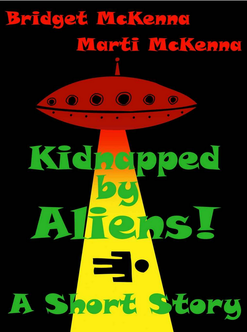
"Kidnapped by Aliens!"
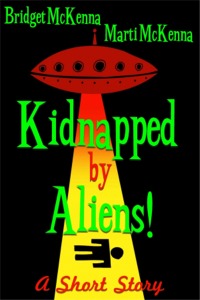
Today "Kidnapped by Aliens!" went live on Amazon.com. 

The story behind the story begins with two writers working at a large computer game company in the early 1990s, in a cubicle of a nice size for one writer. One small writer who doesn't move around much.
But as luck would have it, it holds two—a mother-daughter team whose duties include writing ads, magazine articles, sales copy, box copy, and documentation, and editing game designers' in-game text. Two desks and two writers pushed up against one another 8 hours a day (when we were lucky) five days a week, for more than a year. That's why we made the big bucks. 

Oh, wait...the pay was crap.

Well anyway, that's why we collaborated at work, and we also wrote together on our own time. And this particular collaboration has recently been dusted off and re-imagined as what we think is a better story with more interesting characters than when it was originally published in Tomorrow SF, in 1995, edited by Algis Budrys.

Kidnapped by Aliens!, the Making-Of Special

What follows is the afterword included in the back of the book that is now live on amazon.com.  You can read it here even if you don't shell out 99c. But of course you're welcome to do that, too. So without further ado...

BMcK: I remember how we started writing this. We were working at Sierra On-Line around 1991. We shared a cubicle sized for one, so we wrote in one another’s pockets for well over a year.

This was about the same time we were working on “Remarkable Things,” another story set in the universe of tabloid stories, though I don’t remember which one came first. Anyhow, you mentioned someone you’d like to see “disappeared,” and quickly amended that you didn’t want any harm to come to them, but maybe they could just be kidnapped by aliens.

As so often happened in those days, one of us said “I feel a story coming on,” then we said in unison, “Kidnapped by Aliens!” And so the title was born, exclamation point and all.

I’ve lost some brain cells were this story’s concerned. We both left Sierra in 1991, but if it appeared in Tomorrow SF in 1995, we couldn’t have sold it any earlier than 1994. Did we send it to a lot of other editors first?

MMcK: Yeah, it made the rounds before Algis Budrys decided it was just the thing for his magazine. And I remember that moment. Re-reading the original draft of the story, it hit me that we were more cynical in those days. Our main character wasn’t very likable from where I’m standing now. It made me happy to give him a workover for this release—he’s a better man for it.

BMcK: Yeah, I wouldn’t like that guy (er, Guy) much now. He was a lot shallower. I think we were playing the humor angle a little harder back then, and painting with broader strokes. It’s been a real education in how we operate as writers to go back over this story.
MMcK: Yeah, it was satisfying to bring it up to a new standard. We’re publishing a better story than we did back then.

So, we should talk about how we collaborate. Over the years we’ve encountered so many writing-team permutations, and I think they’ve all had a different way of working together.

BMcK: Right. Some partnerships have one person do a rough, the other polish it. Some divide characters between them. And I remember that one well known science fiction writing team we were on a panel with said that no-one should ever collaborate unless there was no other way to get the story written. I’m glad we didn’t hear that before we started, because in our experience, collaboration was tremendous fun.

Our particular method of collaboration was usually to sit down and throw ideas around and get an overview of the story and events, which was open to change as we went along, of course. Then somebody would start. In this case, it was you who wrote the opening scene. Then we’d trade back and forth until we got to the end. Then we’d fiddle with it.

MMcK: Re-reading it, I can honestly say I don’t know who wrote what 99% of the time. But back then, we’d each write a scene, hand it off, edit the other person’s work and then write the next scene. And we always knew who was responsible for what…except for that one time.

BMcK: Ah, yes. That one time. We were collaborating on “Remarkable Things,” which was about two very different families who lived next door to one another. The children get acquainted as the story opens, and at some point we realized that the mothers would have to get together for coffee and get to know one another. The problem was, neither of us really wanted to write the scene. “I think you should write it.” “No, I think you should.” Lather, rinse, repeat.

So one day the scene appears in the latest draft, and one of us says, “Hey, good job on the Moms scene,” and the other one says, “What’re you talkin’ about? You wrote it.” “No, you did.” “I totally didn’t.” We finally decided our “third writer” must have written it. None of the stories we collaborated on ended up much like what either of us did on our own. In fact, fellow writers trying to guess who’d written which scene were almost always wrong. Between us we made a third writer.

MMcK: It was so bizarre. We were both so certain we hadn’t written it! Maybe it was a ghost writer…

Anyway, I think that’s one thing a lot of writing teams have in common. Collaboration is a different way of creating—I think we were able to egg each other on and validate each other’s ideas in a way that the solitary writer can’t. Writing is generally a lonely business and writers spend a lot of time doubting themselves, so these partnerships can be sort of freeing in a way.

BMcK: Exactly. Half the story is someone else’s responsibility; somehow it’s easier to just have fun with it.

So all these years later we come back to this story. We still like the fun of the idea, but Guy and Carol-Ann needed some major tweaking to make them more likable. And there were anachronisms we needed to zap, too. In the original story, Guy wears a tie to go to work at a software company. Back then there were still a few companies—especially in productivity software, which is what Guy writes for—where people still dressed up to go to work. But not these days. Zap! Guy goes to watch a video, but wait—it’s a VHS tape! Zap!

MMcK: Yes, in order for the story to work in this century, we had to lose anything that would thrown the reader out of the story. In a few years, DVDs might seem ridiculous, but for now the story flows more naturally with these updates in place. And as I said, I think overall we’re publishing a better story this century than we did in the last one.

BMcK: I agree. I think we ought to do it again.


A Little Night Music, by Bridget McKenna
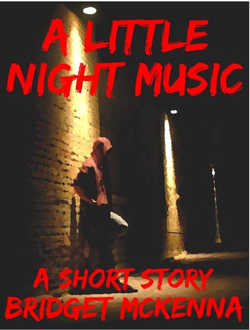
"A Little Night Music," by Bridget McKenna
NEW:
Scroll down to the end of this article to see the original Dell Harris illustration from Amazing Stories magazine!

Today I published a new short story ebook on Amazon, “A Little Night Music.” Well, it’s new to Amazon, but it was first published nearly twenty years ago in Amazing Stories magazine. The ebook version has undergone a pass by my editor and some minor rewriting, and I think it stands up pretty well to anything I’d write today. I’m rather proud of it.

All stories have stories behind them; this has more of a story than most. If it wasn't for love of what it said to me, it would never have been written. What follows here is the afterword to the book. You can read it here even if you don't shell out 99c. But of course you're welcome to do that, too.

I got the idea for “A Little Night Music” in early 1986, when a chance remark by my daughter, linking music and drugs in a humorous way, caused me to say “Yeah...why not?” and the idea for the story was born, though humor was not to be one of the ingredients. I didn’t finish it until sometime in 1991.

I mentioned in my afterward to “Hole in the Wall” that I’d had a handful of recalcitrant story ideas on the back burner when I went to the first Writers of the Future workshop in Taos, New Mexico in May of ‘86. This was one of them. I worked on the plot and storyline a bit for one of the exercises our teachers assigned us for our out-of-class hours, or that portion of them when we weren’t gathering in one of our motel rooms or some Taos eatery discussing writing, politics, writing, how to fix the world, and writing.

When I got home from Taos, I started working on the story. I sat in coffee shops in the mornings before going to work in a bookstore, and wrote in longhand on yellow legal tablets. Old school. This was before laptops, by the way, but after coffee. I really loved it; in those days that hour and a half before work defined me in important ways. I wrote in longhand, did lots of research, and wrote careful, crowded pages of notes. Then I put it all away; I no longer knew where it was going, and I didn’t feel equal to the task of finding out. The story felt too ambitious for me.

A few years later I decided I was ready to pick the story up again, and went looking for the notes and partial draft. I had moved twice since then, and the pieces of my story were nowhere to be found. In fact, I’ve never found them. But I wanted to finish it, and I knew I was a better writer than when I’d played around with it the first time. So I started over with what I knew of the characters and what I was trying to say with the story, and built it up again, paragraph by paragraph. Eventually I found out where it was going, and it wasn’t easy taking it there.

I’ve always been interested in stories that don’t have heroes, exactly, but do have believable point-of-view characters. I’m fascinated by the question “When your back’s to the wall, which is stronger—love or fear?” And I love me some Mozart.

So I set out to discover who these men were who were going to tackle that thematic question for themselves, with their own lives. I put them into a near-future Los Angeles—or perhaps I should say I waited to find out where they were, and that was where I found them—and let them talk, and argue, and drink beers, and do business together. And I added a menacing presence whose interest in them was going to threaten everything that mattered.

If I’m doing it right, I’m always surprised by things that happen in my stories. The ones I like best have always had some moment I didn’t see coming until I saw the words. This happened to me over and over while I wrote “A Little Night Music.” While I was re-keying the story for this publication, I found myself surprised all over again by things that happened that I hadn’t remembered, despite having written them.

Some people consider it painfully cliché to say that characters have a life of their own and make their own decisions, but the best ones actually do, because we know them better than we think we do. They have a reality in parts of our minds we don’t often connect with, but when we allow that connection to open, they will sometimes stick their heads up and tell us things we didn’t expect. Early in my first draft, I tried to write that Vince Raynor had stayed home from work owing to the effects of his addiction. I didn’t even get the words down before Vince popped up in my mind and said “No. I go to work. I always go to work.” I conceded to his superior knowledge of himself. Much later in the story, when he’s walking closer to the edge, he does stop going to work. And at that point it means something because he’d never done it before.

No, I don’t believe disembodied characters actually write my stories, but not surprisingly given that I’m a hypnotist, I give a lot of credence to my unconscious mind. It’s a wonderful writing partner.

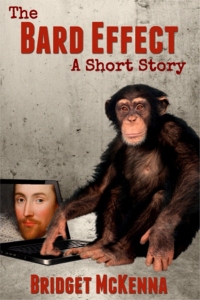
When I was done with the story, I sent it to Kim Mohan, probably because he had recently bought another of mine, “The Bard Effect.” Here’s what he had to say about it when it appeared in the July 1992 issue of Amazing Stories:

“Music and drugs have a connection that goes way back. In “A Little Night Music,” Bridget McKenna takes that connection and tightens it down until the words come to mean basically the same thing....” 

So thanks to Kim for believing in the story, and to all the past and future readers for reading it.

A Little Night Music, illustration by Dell Harris
A Little Night Music - Illustration Copyright (C) Dell Harris, 1992


A Little Night Music Original Illustration

This is the Dell Harris artwork for "A Little Night Music" when it appeared in Amazing Stories in 1992. Thanks to my family, Dell's sales agent Angela Lowry, and Dell himself, I now own the original.

Is that cool, or what?


Web Analytics